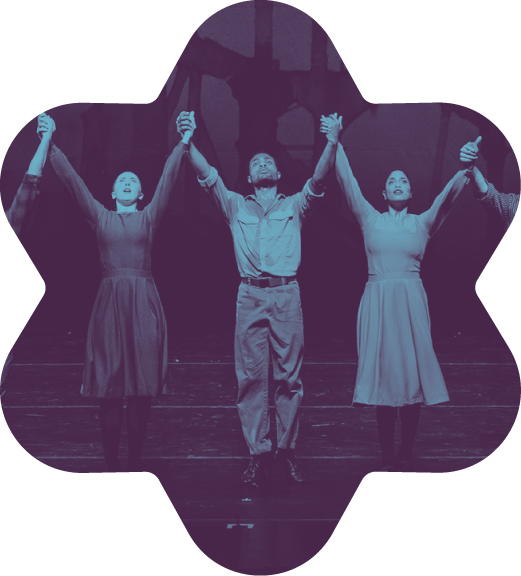
The first full picture of arts in health starts with you.
This national effort is made possible by a broad coalition of partners across the field.

Our Mission
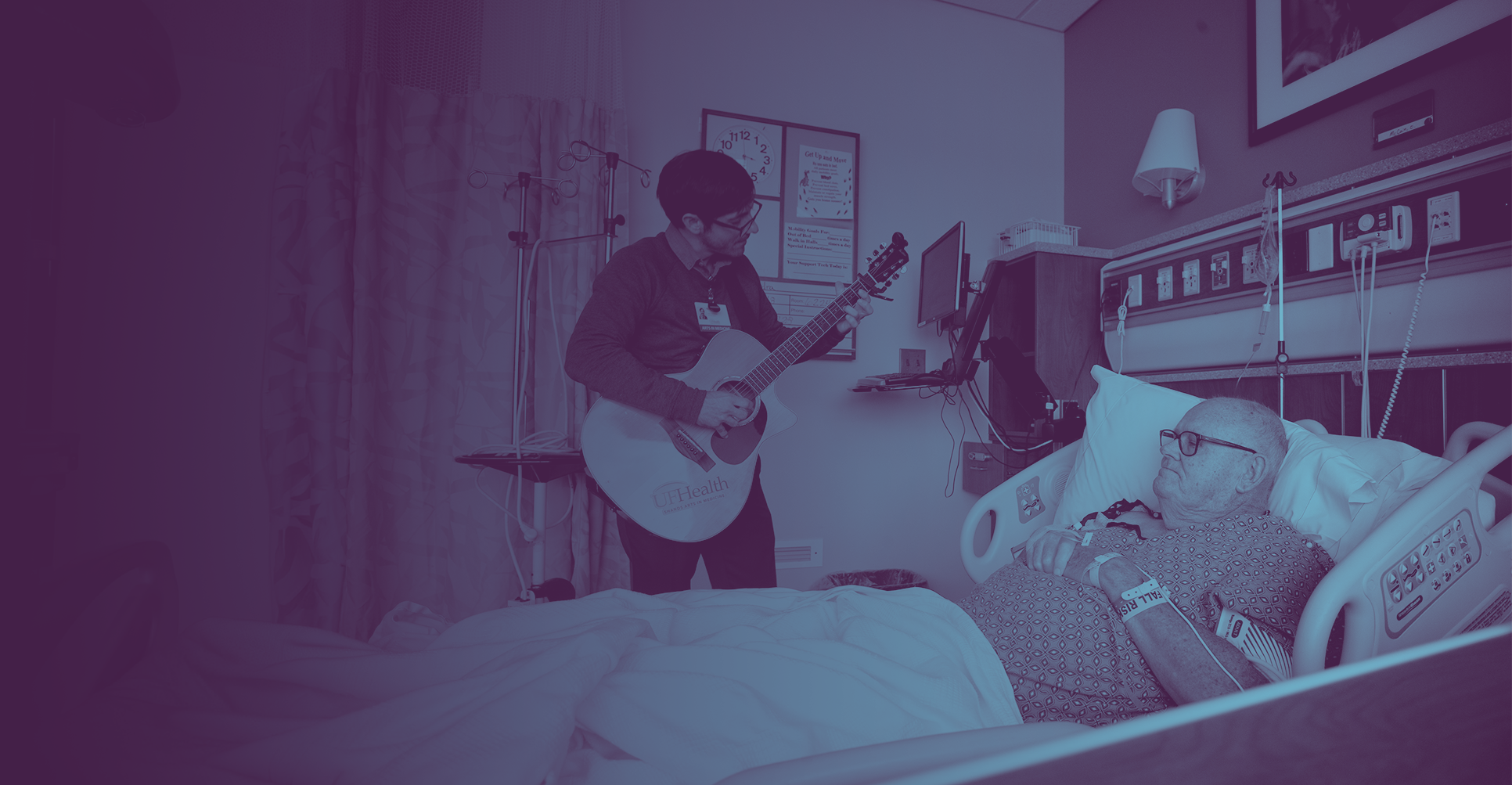
Across the United States, people are using the arts to help others heal, connect, and thrive: in hospitals and hospice rooms, in clinics and community centers, schools, studios, and homes. It is significant, growing work, and this field has never been fully counted or described.
The U.S. Arts in Health: State of the Field Project is a series of comprehensive, national research studies. This is a shared effort that belongs to everyone doing this work. The first study is the U.S. Arts in Health Census which is a national survey documenting who does this work, how it is practiced, and how it is funded. A State of the Field Report and associated resources will turn the Census findings into the first national portrait of arts in health. Future terminology research will draw on the field's own words to build shared language for defining and describing this work.
We aim to hold up a mirror, so the field can finally see itself whole.
Who this is for
No matter how you describe your work, you belong here.
Maybe you see yourself clearly in the words "arts in health." Maybe you call your work healing arts, creative health, neuroarts, social prescribing, or community arts. Maybe you are a teaching artist, a musician, a dancer, or a storyteller working in a clinic, a classroom, or any other community setting, and you have never had a name for it at all. It still counts, and we want you counted.
If your work unites creativity and health, this study is for you.
The Census
Your perspective today, shapes the field tomorrow.
The U.S. Arts in Health Census is a national survey documenting who makes up this field and how the work really happens. It takes about 20 minutes, your answers are confidential, and it is open to anyone 18 or older using the arts to support health anywhere in the United States and its territories.
This is your chance to help draw the first national portrait of the field. The more of us who respond, the clearer that picture becomes.
Research you can actually use, about the work you actually do.
What we learn, we give back to the field in three forms:
Facts that create a shared foundation the field can
build on, together.
Research you can use, written in plain language, not locked behind a paywall.
Policy briefs that advocates can carry into the rooms where funding and policy are decided.
Terminology
Language for the field, from the field.
Arts in health, creative health, healing arts, neuroarts, social prescribing, and more: the sheer number of names we use makes it harder to advocate, to fund, and to be understood.
Using what the field tells us through the Census, in 2027 we will embark on a Delphi Method research study to determine what the field sees as its umbrella term, and that terms' definition. In 2028, we will publish U.S. Arts in Health Terminology, a shared vocabulary drawn directly from the people doing the work.
Help define the field by clicking below.
Become an Amplifier by downloading our free toolkit of ready-to-share graphics, and help the Census reach every corner of the field.
Help us reach the whole field.
The results belong to the field, which means they belong to you.
Join our list and we will send the reports, the shared vocabulary, and the tools as soon as they are ready.
Be the first to see the findings.
Frequently Asked Questions
-
For the purposes of this survey, we are using the following definition of arts in health, adapted from the National Organization for Arts in Health (NOAH, 2017):
“Arts in health is a field dedicated to using the power of the arts to enhance health and well-being in diverse institutional and community contexts. Comprised of many subfields and affiliated fields, arts in health supports health as defined by the World Health Organization (WHO), as "a state of complete physical, mental, and social well-being and not merely the absence of disease or infirmity."
-
We chose this definition because it is a widely cited and broadly inclusive working definition that attempts to honor the full range of practice settings, from clinical healthcare environments to community contexts, and encompasses the many subfields and disciplines that make up this work.
We know this definition is imperfect, and we know the language is contested. Whether you call your work arts in health, arts and health, arts for health, creative health, healing arts, community arts, social prescribing, neuroarts, or something else entirely: we want to hear from you. This survey is about understanding who is doing this work, how, and for whom.
-
We are especially eager to reach practitioners who may not see themselves in formal field language, including but not limited to:
Teaching artists working in clinical and educational settings
Community-based creatives whose practice is rooted in culture and place
Volunteers and part-time practitioners
Public health, healthcare and other care practitioners and researchers who use arts-based methods
Culture bearers and community healers whose work has always centered the relationship between creative expression and well-being
Regardless of what it has been called, you belong here and we want to hear from you.
-
Anyone 18 or older who uses the arts to support health or well-being in the United States and its territories can participate. Practitioners, artists, researchers, educators, funders, administrators, and volunteers: if you are part of this work, we want to hear from you.
-
Approximately 20 minutes. We know your time is valuable, and we have worked to make every question count.
-
You get to be counted in the first national portrait of the field and help inform how the field understands and defines itself for years to come.
As a thank-you, respondents can also enter our prize drawing including:
(20) Signed copies of Art Cure by Dr. Daisy Fancourt
(20) Signed copies of The Connection Cure by Julia Hotz
(5) Free Registration to NOAHCON 2027
(25) $100 Digital Gift Cards
(50) $50 Digital Gift Cards
-
No information that can identify you will appear in any professional presentation or publication.
All efforts will be made to keep your responses confidential, but total confidentiality cannot be guaranteed. We will use Qualtrics to collect and forward your responses to us. We will know your IP address when you respond to the online research. We will not ask you to include your name or email address when you complete the survey. Your IP address will be stored with your responses but will only be used in our bot/fraudulent response detection process.
If you choose to enter the prize drawing, your name and email address will be collected through a separate form and will not be linked to your survey responses. Prize-drawing contact information will be destroyed at the close of the study. Responses will be deleted at the close of the study.
-
Your responses will help document who comprises this workforce, how the work is practiced and funded, and where the field is headed — data that does not yet exist at a national scale and that advocates, funders, policymakers, and practitioners urgently need.
We commit to transparently reporting all findings back to the field via a plain language report, website, and peer-review publication; with the goal of completing the report and website by fall 2027. A connected project related to language and terminology in the field will start in 2027 and be completed in 2028.
-
The U.S. Arts in Health: State of the Field is a national research initiative, made possible by a coalition of partners committed to understanding and strengthening this field.